

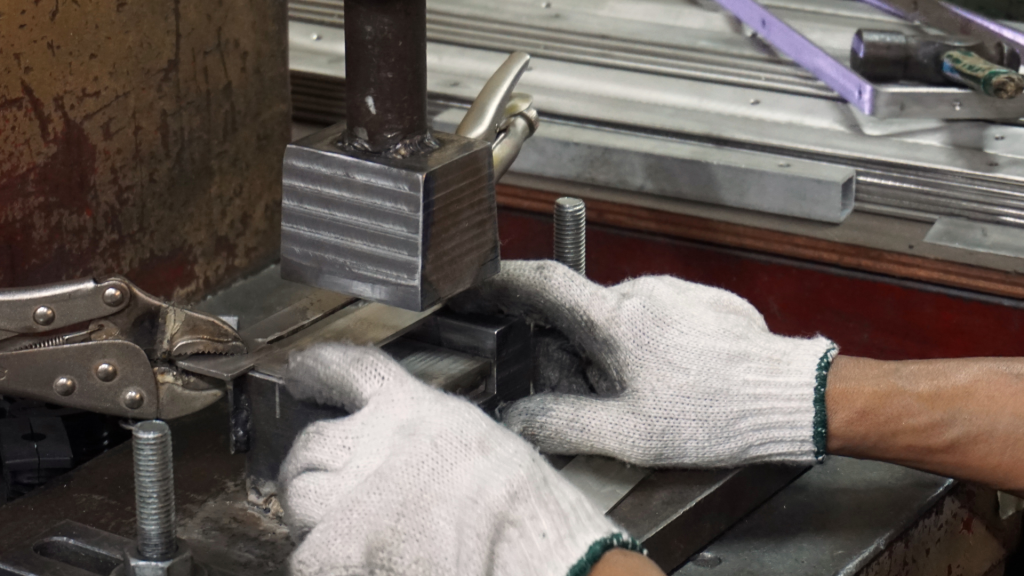
New Jersey is home to over 1,200 industrial manufacturing firms, a significant portion of which depend on metal stamping for precision components across automotive, aerospace, electronics, and defense sectors.
With 19+ specialized stamping operations concentrated in corridors like Hamburg and Maple Shade, NJ offers one of the most competitive manufacturing ecosystems on the East Coast.
But proximity alone does not guarantee a reliable partner. The wrong manufacturer means missed tolerances, delayed shipments, and cost overruns that damage your supply chain and your bottom line.
This guide gives engineers and procurement managers a clear, no-nonsense framework for evaluating metal stamping companies in NJ.
You will walk away knowing exactly which capabilities to demand, which certifications to verify, which questions to ask before signing a contract, and which local firms have earned their reputations.
Seven criteria. One repeatable process. Zero guesswork.
What Is Metal Stamping and Why NJ?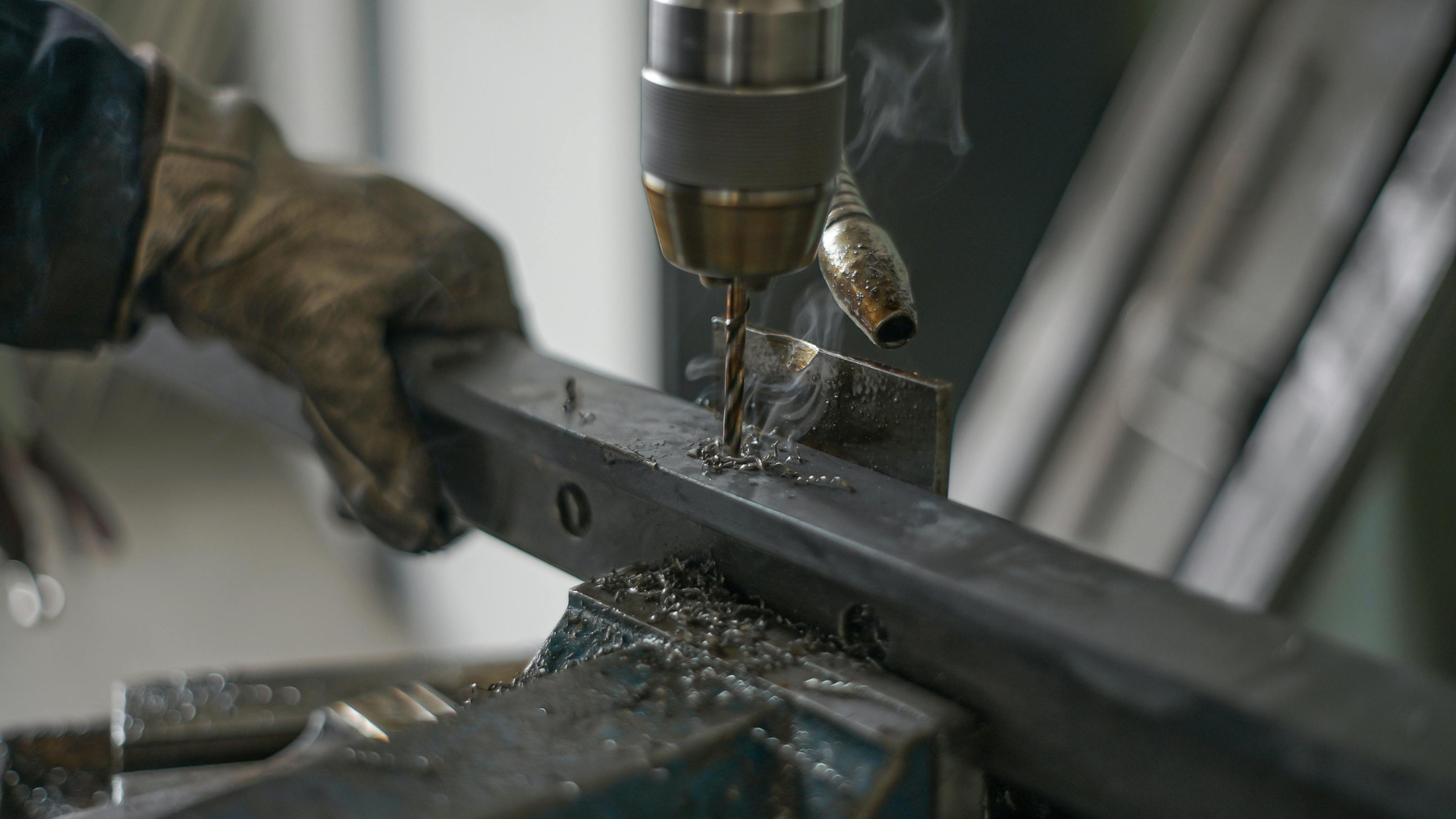
Metal stamping is a high-volume manufacturing process that uses dies and presses to cut, bend, and shape flat metal sheets into precise components. Common outputs include brackets, enclosures, contacts, terminals, and structural parts.
The process delivers tight tolerances, consistent repeatability, and low per-part costs at scale, making it the production method of choice for industries where precision and volume are non-negotiable.
New Jersey is one of the strongest metal stamping markets on the East Coast. The state offers direct access to the Port of Newark, a dense skilled-trades workforce, and established industrial clusters in areas like Hamburg and Maple Shade.
With 19+ specialized stamping operations and firms like Weiss-Aug, Thomson Lamination, and General Stamping serving automotive, aerospace, defense, and electronics OEMs, NJ gives procurement teams a deep, competitive local supplier base, with the logistical infrastructure to support it.
Defining the Metal Stamping Process
Metal stamping converts flat metal sheets into precise components using hardened dies and mechanical or hydraulic presses. The die cuts, bends, or forms the metal in a single stroke or series of strokes depending on part complexity.
Progressive die stamping moves a metal strip through sequential stations in one continuous press run, each station performing a different operation until the finished part is ejected.
Deep draw stamping pulls sheet metal into a die cavity to form hollow, three-dimensional shapes like housings, canisters, or cups. Both methods are engineered for high repeatability, consistent tolerances, and cost efficiency at volume.
Why New Jersey Is a Hub for Metal Stamping
NJ’s manufacturing advantage starts with location. The state sits within one day’s freight distance of over 40% of the U.S. population and has direct access to the Port of Newark, one of the busiest cargo ports on the East Coast.
Raw materials move in fast. Finished parts move out faster. For time-sensitive production schedules, that infrastructure matters. Beyond logistics, NJ has sustained industrial clusters in Hamburg and Maple Shade with a deep skilled-trades labor pool.
Firms like Weiss-Aug, Thomson Lamination, and General Stamping have built decades-long track records serving automotive, aerospace, defense, and electronics OEMs, giving local buyers a vetted, competitive supplier base without leaving the state.
Top Capabilities to Look For in NJ Metal Stampers
Not every stamping shop can handle every job. Before shortlisting vendors, you need to know exactly which technical capabilities are required for your parts, and verify that your NJ manufacturer can deliver them consistently. Capability gaps discovered mid-production are expensive. Identifying them upfront is not.
Precision Tolerances & Materials
Your manufacturer must hold the tolerances your parts demand, no exceptions. Top NJ stampers work to tolerances as tight as ±0.001 inches, which is the standard benchmark for precision components in automotive and electronics applications.
On materials, confirm the shop has proven experience with your specific alloy. Leading NJ operations work across stainless steel, cold-rolled steel, aluminum, brass, and copper.
Each material behaves differently under press force and die geometry, a shop without documented experience in your material is a production risk.
Processes & Technology
Confirm the stamping processes your parts require are part of the shop’s core production, not a capability they occasionally offer. Progressive die stamping is the standard for high-volume, multi-feature parts.
Deep draw is essential for hollow or cup-shaped components. CNC integration adds precision for complex geometries. For a practical reference point on what a full-service press room typically includes, see DureX’s expert metal stamping services, including progressive die and deep drawn capabilities
Northeast Metal Works, for example, specializes in stainless steel T-nuts and custom hardware using progressive die methods, a clear indicator of process depth, not just breadth.
Certifications & Scalability
ISO 9001 certification is the baseline quality standard; any NJ stamper without it should be removed from your list immediately. For defense or government contracts, verify ITAR registration. DDTC manages registration through its DECCS portal, so if ITAR applies to your programme, confirm the supplier’s status against the official process: DDTC registration guidance (DECCS). Beyond certifications, assess scalability.
Your manufacturer needs to handle prototype runs without inflating unit costs, and scale to millions of parts without quality degradation.
Thomson Lamination and similar NJ operations maintain documented quality management systems precisely because their clients demand consistent output across varying production volumes.
7 Key Criteria for Choosing a Metal Stamping Manufacturer in NJ
Choosing the wrong stamping partner costs more than the contract; it costs production time, rework, and supplier relationships. The seven criteria below give procurement managers and engineers a repeatable evaluation framework specific to NJ manufacturers. Apply all seven before signing anything.
| Criterion | Why It Matters | NJ Evaluation Tips |
| Experience | Reduces defects and production risk | Look for 50+ years (e.g., General Stamping, Columbia NJ) |
| Equipment | Determines speed and part complexity | Verify 100–500 ton presses; check Accurate Forming |
| Capacity | Supports business growth | Prototype to high-volume capability; Northeast Metal Works |
| Quality Control | Ensures compliance and consistency | ISO audits, SPC documentation; Thomson Lamination |
| Location/Logistics | Reduces freight cost and lead time | Prioritize vendors within 50 miles of your NJ facility |
| Customization | Enables complex or unique part designs | Confirm design engineering support; Weiss-Aug |
| Pricing/Lead Time | Keeps projects on budget and schedule | High-volume quotes should fall under $0.10 per part |
Criterion 1: Experience
Years in operation is a direct indicator of process maturity. A shop with 50+ years of production history has encountered and resolved the failure modes that newer operations have not.
General Stamping in Columbia, NJ is a benchmark example, decades of documented production across multiple industries means fewer surprises on your program. When evaluating experience, ask for industry-specific case studies, not just a founding year.
Criterion 2: Equipment
Press tonnage determines what your manufacturer can produce. Light-gauge parts may require 100-ton presses, while structural or thicker-gauge components demand 400–500 tons or more.
Accurate Forming in NJ operates equipment across this range, making them capable of handling both precision light-gauge and heavier structural stamping.
Always request a full equipment list; a shop that cannot provide one is not a shop you want managing your tolerances.
Criterion 3: Capacity
Capacity is not just about volume; it is about flexibility. Your stamping partner needs to run small prototype batches without penalizing unit cost, then scale to high-volume production without quality drift.
Northeast Metal Works demonstrates this range with custom hardware programs that span from initial prototypes to sustained high-volume runs. Confirm minimum order quantities upfront and get documented lead times for both low and high-volume scenarios.
Criterion 4: Quality Control
ISO 9001 is the floor, not the ceiling. Beyond certification, ask how quality is enforced on the production floor. Statistical Process Control (SPC) is the standard for monitoring dimensional accuracy in real time during a press run.
Thomson Lamination’s documented QC systems are a model for what rigorous in-process inspection looks like in an NJ stamping environment. Request recent audit reports and non-conformance data before committing to a vendor.
Criterion 5: Location & Logistics
An NJ vendor within 50 miles of your facility cuts freight costs, simplifies site visits, and shortens emergency response times when something goes wrong.
It also reduces exposure to interstate shipping delays. Map your shortlisted vendors against your facility location before the RFQ stage, logistics costs are a real variable in total part cost and should be factored into every quote comparison.
Criterion 6: Customization
Standard catalog parts do not require a stamping partner. You are sourcing a manufacturer because your parts are specific. Confirm that your vendor offers in-house engineering and design support, not just press operations.
Weiss-Aug is a strong NJ example, integrating precision stamping with insert molding and engineering design services. That kind of in-house capability reduces handoffs, protects IP, and accelerates development cycles.
Criterion 7: Pricing & Lead Time
High-volume stamping should drive unit costs below $0.10 per part depending on material and complexity. If quotes are significantly above that benchmark without justification, the vendor either lacks volume capacity or is padding margin.
On lead time, standard production runs in NJ typically range from 4–8 weeks. Expedited programs should be available with clear surcharge structures. Get both numbers in writing before any program commitment.
Spotlight on Leading Metal Stamping Companies in NJ
The NJ metal stamping market has a strong core of established operations with verified capabilities across industries. The firms below represent a cross-section of that market, each with a distinct specialty, documented production history, and a track record with industrial clients. This is not an exhaustive list, but it is a practical starting point for any procurement shortlist.
Accurate Forming: Best for Deep Draw Stamping
Accurate Forming is a NJ-based operation specializing in deep draw stamping for complex, hollow components.
Their capabilities cover a range of metals including steel, stainless steel, and aluminum, with tight tolerance control across high-volume runs. They are a strong fit for automotive and industrial clients requiring formed housings, canisters, or cup-shaped parts at scale.
Strengths: Deep draw expertise, multi-material capability, high-volume capacity. Considerations: Confirm lead times for prototype runs.
Deep draw tooling has longer setup cycles than progressive die. Best for: Automotive, industrial equipment, consumer hardware.
National Die: Best for Brass Components and ISO Compliance
National Die brings ISO-certified production to brass and copper stamping, a niche that requires precise material handling and die engineering.
Their quality management systems are documented and audit-ready, making them a reliable option for clients in electronics and electrical components where material conductivity and dimensional accuracy are both critical.
Strengths: ISO certification, brass and copper specialization, strong QC documentation. Considerations: Verify capacity for your required volume. Specialty material shops can carry longer backlogs. Best for: Electronics, electrical components, connectors.
General Stamping: Best for Legacy Experience
Based in Columbia, NJ, General Stamping brings over 50 years of production history to the table. That depth of experience translates directly into process maturity, fewer tooling errors, faster problem resolution, and a production floor that has handled virtually every stamping challenge across automotive, defense, and industrial sectors.
Strengths: Decades of cross-industry experience, proven process reliability, broad material capability. Considerations: Evaluate equipment age.
Long-standing shops occasionally run older press infrastructure alongside modern lines. Best for: Automotive, defense, heavy industrial.
Weiss-Aug: Best for Precision Stamping with Engineering Integration
Weiss-Aug operates at the intersection of precision metal stamping and insert molding, with in-house engineering design support that sets them apart from pure press shops.
For programs requiring tight tolerances, complex geometries, or integrated plastic-metal assemblies, Weiss-Aug removes the multi-vendor complexity by handling engineering and production under one roof.
Strengths: In-house engineering, precision tolerances, insert molding integration, strong defense and medical track record. Considerations: Premium capabilities carry premium pricing. Confirm budget alignment before engaging. Best for: Medical devices, defense, electronics, precision assemblies.
Thomson Lamination: Best for Quality-Driven Electronics Stamping
Thomson Lamination focuses on lamination stamping for motors, transformers, and electronic assemblies, a highly specialized segment that demands exact dimensional control and material consistency.
Their documented quality management systems and in-process inspection protocols make them a fit for clients where component failure is not an option.
Strengths: Lamination stamping specialization, rigorous QC systems, electronics industry expertise. Considerations: Specialty focus means limited applicability outside electronics and motor component programs. Best for: Electronics, motor components, transformers.
Northeast Metal Works: Best for Stainless Steel and Custom Hardware
Northeast Metal Works specializes in stainless steel progressive die stamping for custom hardware including T-nuts, fasteners, and precision inserts.
Their strength is repeatability at volume on tight-tolerance hardware components, a profile that suits electronics, industrial equipment, and any program requiring consistent custom fasteners.
Strengths: Stainless steel expertise, progressive die capability, custom hardware focus, prototype-to-volume scalability.
Considerations: Narrower material range. Confirm capability if your program requires aluminum or brass. Best for: Electronics, industrial equipment, custom hardware programs.
Step-by-Step Selection Process for NJ Metal Stamping
Selecting a metal stamping manufacturer is not a single decision; it is a structured process. Skipping steps increases the risk of misaligned capabilities, surprise costs, and production failures. Follow this sequence in order before committing to any NJ vendor.
Each step is designed to eliminate unqualified vendors early and surface the right partner before a contract is signed.
Step 1: Define Your Specifications
Before contacting any vendor, document exactly what your program requires. This means material type and grade, part geometry, dimensional tolerances, surface finish requirements, annual volume, and any secondary operations needed such as welding, plating, or assembly.
Vague specs produce vague quotes. The more precise your specification package, the more accurate and comparable your RFQ responses will be.
Step 2: Research NJ Vendors
Use IQS Directory, ThomasNet, and the NJ Business Action Center to build an initial list of qualified stamping operations. Filter by capability, certifications, and industry experience.
Cross-reference company profiles against your spec requirements and remove any vendor that cannot demonstrate direct experience with your material or process. Aim to enter the RFQ stage with no more than five viable candidates.
Step 3: Request RFQs from 3 to 5 Firms
Send a formal Request for Quote to your shortlisted vendors. Your RFQ package should include your full specification document, target annual volume, required lead time, and any compliance or certification requirements.
Request itemized pricing that separates tooling costs from per-part production costs. This breakdown is essential for accurate total cost comparisons across vendors.
Step 4: Audit Facilities and Schedule Site Visits
A quote on paper tells you what a vendor wants you to know. A site visit tells you what is actually happening on the production floor.
Visit shortlisted facilities and assess press equipment condition, floor organization, in-process inspection stations, and workforce experience.
Ask to see active jobs running on the floor. A shop unwilling to accommodate a site visit before contract award is a shop with something to hide.
Step 5: Test Prototypes and Review MOQs
Before committing to production volumes, require a prototype run. Evaluate dimensional accuracy against your tolerance spec, surface finish consistency, and part-to-part repeatability.
Simultaneously, confirm the vendor’s minimum order quantity and whether it aligns with your program’s ramp schedule. A manufacturer that cannot accommodate your prototype volume without inflating unit costs may struggle to scale production efficiently.
Step 6: Negotiate Contracts with SLAs
Once a vendor is selected, formalize the relationship with a contract that includes documented service level agreements.
Key terms should cover on-time delivery rates, acceptable defect thresholds, tooling ownership, lead time commitments, and escalation procedures for non-conformance.
Do not proceed on a purchase order alone. An SLA-backed contract protects your program if production performance falls short.
Common Mistakes to Avoid When Choosing NJ Metal Stampers
Even experienced procurement teams make avoidable errors when sourcing metal stamping partners. The mistakes below are the most common and the most costly. Knowing them in advance is the difference between a smooth program launch and an expensive vendor switch mid-production.
Overlooking Secondary Operations
Metal stamping rarely ends at the press. Most production programs require secondary operations such as welding, heat treating, plating, assembly, or packaging. If your part also involves brackets, enclosures, or welded sub-assemblies, it can be simpler to source a partner that can support sheet metal fabrication alongside stamping, so fewer handoffs can fail on lead time or quality.
If your stamping vendor cannot perform these in-house, you are managing multiple suppliers, multiple lead times, and multiple quality handoffs.
Confirm full-service capability during the RFQ stage. If secondary ops are outsourced by your vendor, require full transparency on their subcontractor network and quality controls.
Ignoring Supply Chain and Seasonal Risks
NJ winters create real logistics disruptions. Snowstorms, port delays, and freight carrier backlogs can stall raw material deliveries and finished goods shipments without warning.
A single-source stamping strategy with no backup vendor exposes your program to unnecessary risk.
Before finalizing a contract, ask your vendor how they manage supply chain disruptions and whether they carry safety stock on common materials. If the answer is vague, build a contingency supplier into your sourcing plan.
Choosing on Price Alone
The lowest quote is rarely the lowest total cost. A vendor who wins on price but lacks capacity, quality controls, or process experience will generate rework costs, delayed shipments, and potential line stoppages that far exceed any savings on the initial quote.
Evaluate total cost of ownership: tooling amortization, scrap rates, freight, lead times, and the cost of non-conformance. Price is one input in that calculation, not the conclusion.
Failing to Verify Certifications Independently
Do not accept a vendor’s word on certifications. ISO 9001 certificates expire and audits lapse. ITAR registrations require annual renewal.
Request current certificate copies with expiration dates and verify them directly with the issuing body if your program requires compliance documentation.
For defense or aerospace programs, an unverified certification gap discovered after contract award can disqualify your entire supply chain.
Frequently Asked Questions
What industries use metal stamping companies in NJ?
NJ metal stamping operations serve a broad range of industries including automotive, aerospace, defense, electronics, medical devices, and industrial equipment. The concentration of Tier 1 and Tier 2 automotive suppliers in the region, combined with proximity to defense contractors and electronics OEMs along the Northeast corridor, makes NJ stampers well-positioned to serve demanding, high-specification programs across all of these sectors.
How do I verify an NJ metal stamper is ISO certified?
Request a current copy of the vendor’s ISO certificate directly — not a scanned copy from their website. ISO also publishes guidance on how to verify an accredited certification (including using IAF CertSearch), which procurement teams can use as a baseline due-diligence step: ISO’s certification verification guidance.
What is the typical lead time for NJ stamping projects?
Standard production lead times for NJ metal stamping programs range from 4 to 8 weeks depending on part complexity, tooling requirements, and current shop capacity. New tooling programs carry longer lead times than repeat production runs. Expedited programs are available at most NJ operations but carry surcharges. Always get documented lead time commitments in writing as part of your contract, not as a verbal assurance during the sales process.
What is the difference between progressive die and deep draw stamping?
Progressive die stamping feeds a metal strip through a series of die stations in a single press run, with each station performing a different operation until the finished part is separated from the strip. It is best suited for flat or moderately formed parts at high volumes. Deep draw stamping pulls sheet metal into a die cavity to form hollow, three-dimensional shapes. It is the correct process for cup-shaped or canister-style components where the depth of the form exceeds the diameter of the blank.
How much does metal stamping cost per part in NJ?
Per-part costs vary significantly based on material, part complexity, tolerances, and production volume. At high volumes, simple stamped parts can fall below $0.10 per part. Complex geometries, tight tolerances, or specialty materials will increase that figure. Tooling costs are a separate upfront investment and should be amortized across your projected production volume when calculating true cost per part. Always request itemized quotes that separate tooling from production costs to make accurate vendor comparisons.
Conclusion
New Jersey’s metal stamping market is deep, competitive, and capable. But depth of options does not simplify the decision; it raises the stakes of making the wrong one. A misaligned vendor costs more than a bad quote. It costs production time, program credibility, and supply chain stability.
The framework in this guide removes the guesswork. Define your specifications before you contact anyone. Evaluate vendors against all seven criteria, not just price. Audit facilities in person. Test prototypes before committing to volume. Lock in SLAs before production starts. And eliminate vendors who cannot demonstrate certifications, capacity, and process experience specific to your program.
NJ has the manufacturers to support precision programs across automotive, aerospace, defense, electronics, and medical devices. Accurate Forming, Weiss-Aug, General Stamping, Thomson Lamination, Northeast Metal Works, and National Die each bring documented strengths to specific applications. The right partner is on that list; the selection process determines which one earns your program.
Apply the criteria. Follow the steps. Skip the shortcuts.