
New Jersey has long been one of the Northeast’s most active manufacturing corridors. With thousands of industrial firms operating across Union, Piscataway, Newark, and beyond, the demand for reliable, local sheet metal fabrication in New Jersey continues to grow.
Manufacturers and OEMs can no longer afford the delays and quality risks that come with offshore sourcing, and they don’t have to. Sheet metal fabrication is the process of cutting, bending, welding, and finishing metal sheets, typically steel, aluminum, or stainless, into precision components and assemblies
Sheet metal fabrication is the process of cutting, bending, welding, and finishing metal sheets, typically steel, aluminum, or stainless, into precision components and assemblies.
It serves as the backbone of production for industries ranging from electronics and medical devices to HVAC and automotive.
This post breaks down the core services offered by NJ fabricators: laser cutting, bending and forming, welding, machining, and finishing.
It also covers the difference between prototyping and full production runs, and why working with a local New Jersey shop gives industrial buyers a measurable edge in speed, quality, and cost.
If you’re a procurement manager or engineer sourcing custom parts, this is what you need to know.
Laser Cutting & Turret Punching
Laser cutting and turret punching are the starting point for most sheet metal fabrication projects. Both processes shape flat metal stock into precise profiles before any bending, welding, or finishing takes place.
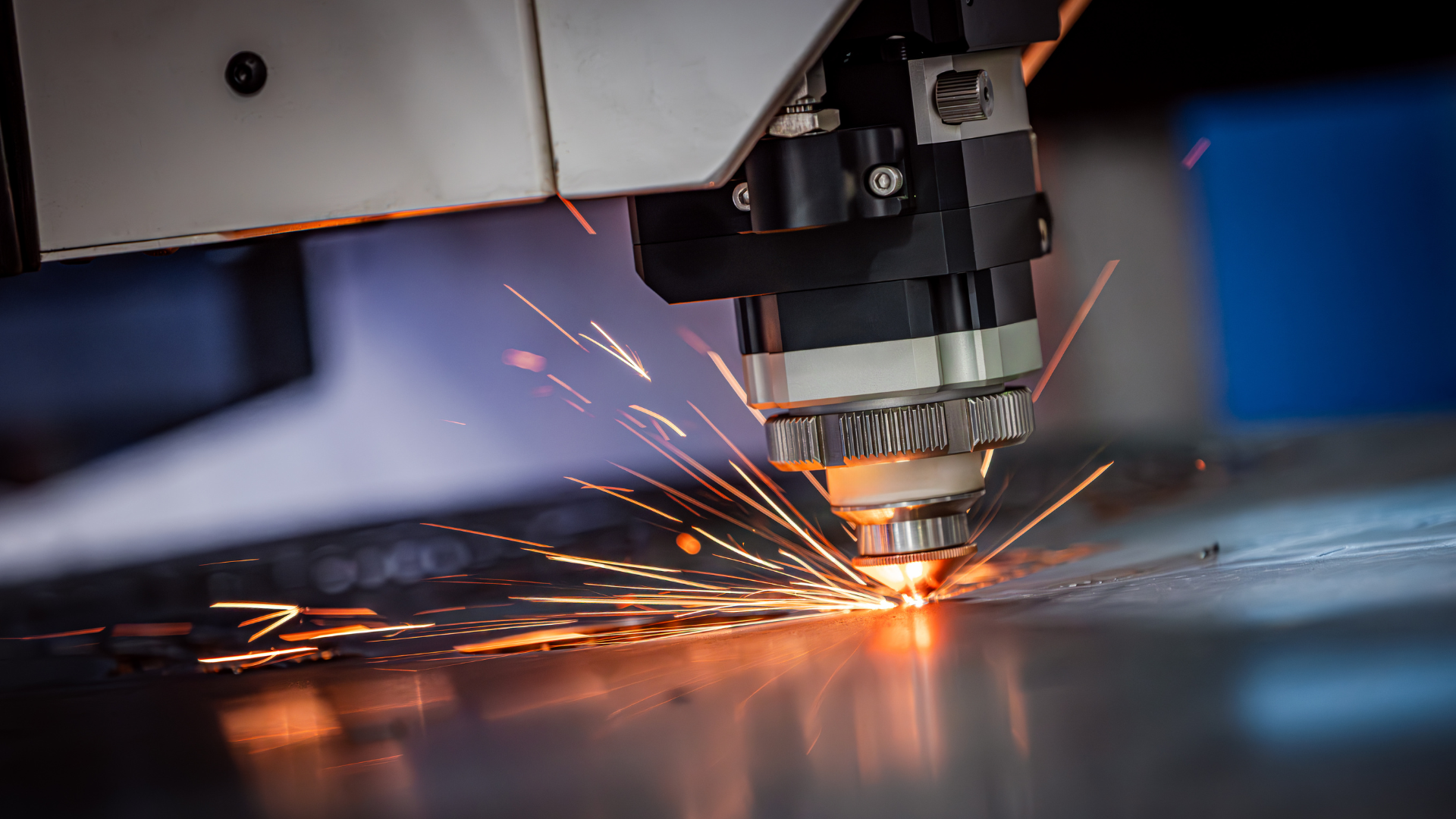
Laser cutting uses a high-powered CNC laser beam to cut through metal with tight tolerances and clean edges. It handles complex geometries, tight cutouts, and intricate patterns that traditional cutting methods can’t match.
NJ fabricators commonly run AMADA CNC laser systems, capable of processing steel, stainless, and aluminum sheet up to several inches thick. Typical turnaround for laser-cut parts runs 1 to 3 days.
Turret punching uses a rotating tool head to punch shaped holes and forms into sheet metal at high speed.
It’s best suited for parts with repetitive hole patterns, louvers, or embosses. While laser cutting offers more geometric flexibility, turret punching is faster and more cost-effective for high-volume flat parts with standard features. When volumes climb and the design is stable, metal stamping can be the next step for even lower unit costs and faster cycle times on repeat parts.
Together, these two processes cover the full range of cutting needs, from one-off prototypes to large production batches.
Common NJ applications include:
- Automotive panels and brackets
- Electronic enclosures and chassis
- HVAC components and vent covers
- Prototype flat parts for design validation
For buyers, the key advantage is speed. A qualified NJ shop can move from a DXF file to cut parts in under 24 hours for standard jobs, no overseas lead times, no communication gaps.
Bending & Forming
Once flat parts are cut, bending and forming shape them into their final three-dimensional profiles.
This is where brackets become brackets, enclosures take shape, and structural components get their load-bearing geometry. It’s a critical stage, an inaccurate bend throws off every downstream fit and assembly.
Modern NJ fabricators run robotic press brake cells that execute repeatable bends with tolerances down to 0.005″.
That level of precision matters for OEMs and manufacturers where interchangeable parts and tight assemblies are non-negotiable across production runs.
Press brake bending is the most common forming method. A CNC-controlled punch and die set applies precise force to bend sheet metal at programmed angles.
Robotic press brake cells take this further by automating part handling, reducing human error, and maintaining consistency across high-volume runs.
Other forming methods include roll forming for curved profiles, hemming for folded edges, and embossing for raised or recessed surface features. The right method depends on material thickness, bend radius, and part geometry.
Common NJ applications include:
- Electrical enclosures and junction boxes
- Structural brackets and mounting hardware
- Equipment housings and chassis
- HVAC plenums and duct transitions
Turnaround for bending and forming typically runs 3 to 5 days depending on part complexity and volume.
For buyers, the advantage of a local NJ shop is direct engineering support; bend sequences and tooling selection can be resolved quickly without overseas back-and-forth.
Welding & Assembly
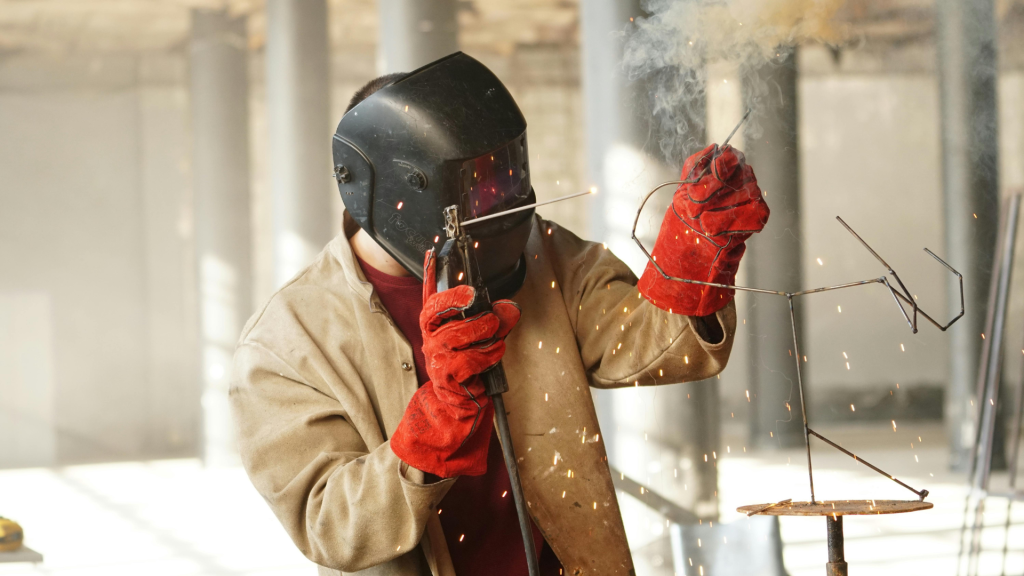
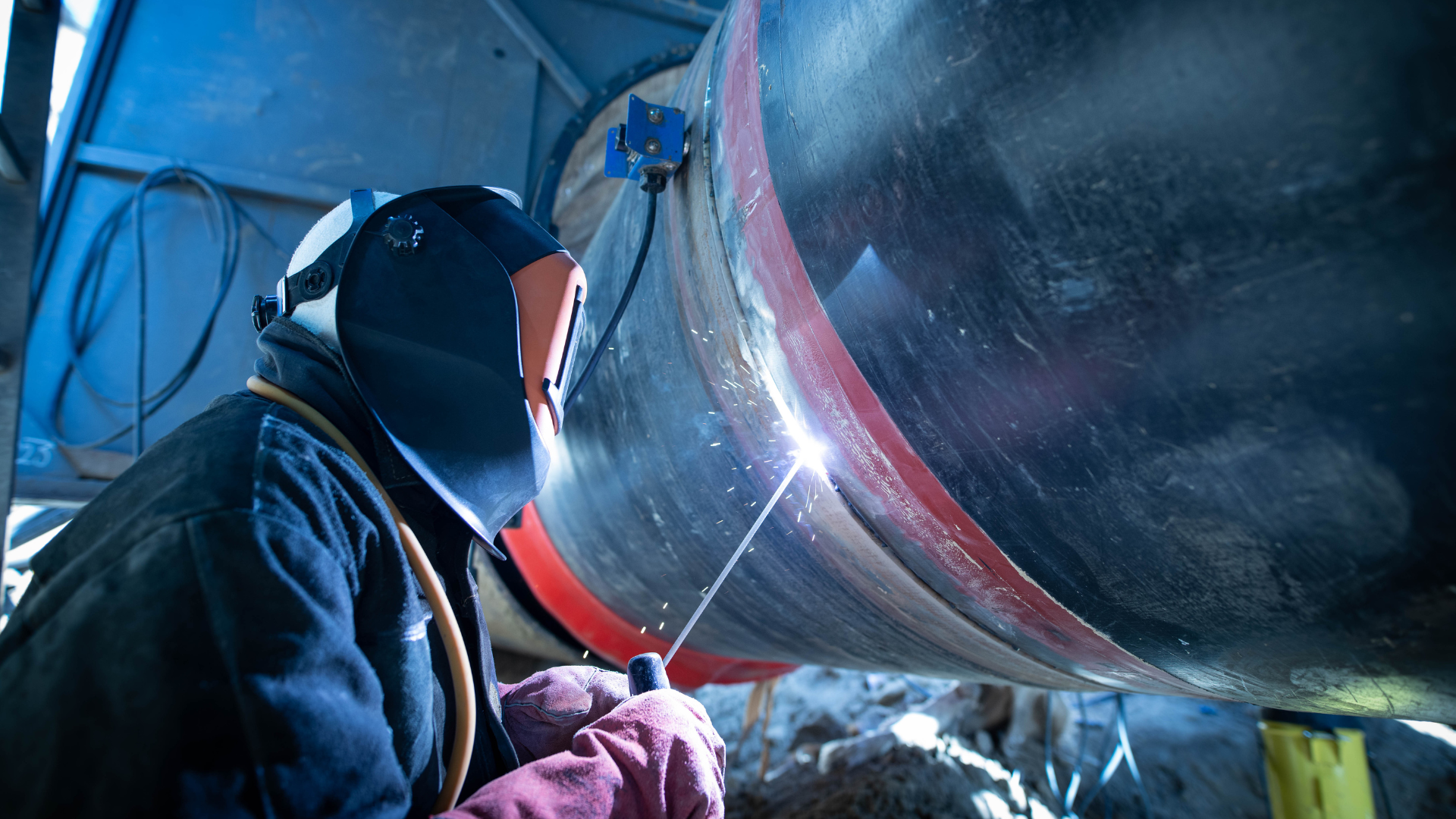
Welding transforms individual fabricated components into complete structural assemblies. It’s the process that joins cut, bent, and formed parts into finished frames, enclosures, and mechanical structures built to handle real-world load and stress.
The quality of welding directly determines the structural integrity and service life of the final product.
Top NJ fabricators go beyond welding alone; they offer full in-house electromechanical assembly, meaning hardware installation, wiring, and component integration happen under the same roof.
For buyers, that eliminates a second vendor, reduces coordination overhead, and compresses overall lead time significantly.
MIG welding is the workhorse of sheet metal fabrication. TIG welding, also known as gas tungsten arc welding (GTAW), delivers cleaner, more precise welds with minimal spatter. It’s fast, cost-effective, and well-suited for steel and thicker materials across mid-to-high volume production runs.
TIG welding delivers cleaner, more precise welds with minimal spatter. It’s the preferred method for stainless steel, aluminum, and applications where weld appearance and accuracy are critical, such as medical enclosures or visible architectural components.
Spot welding uses localized electrical resistance to fuse overlapping sheet metal layers. It’s fast and repeatable, making it ideal for high-volume production of panels and enclosures.
Common NJ applications include:
- Structural frames and equipment bases
- Electronic and electrical enclosures
- Medical device housings
- Welded brackets and mounting assemblies
Turnaround for welding and assembly runs 5 to 7 days depending on complexity. In-house assembly capability means NJ buyers receive a fully finished, ready-to-install product, not loose parts requiring additional work.
Machining & Finishing
Machining and finishing are the final steps that bring a fabricated part to its full functional and visual specification. Machining adds precision features, threaded holes, tight-tolerance bores, and milled slots that sheet metal processes alone can’t achieve.
Finishing protects the surface, adds durability, and in many cases meets industry or customer appearance standards. Powder coating is the most common finishing method for sheet metal.
When both capabilities are in-house, NJ fabricators eliminate the outsourcing cycle that typically adds days or weeks to a project timeline.
Parts move directly from fabrication to machining to finishing without leaving the facility, keeping quality consistent and delivery dates reliable.
CNC machining handles secondary operations on fabricated parts including drilling, tapping, milling, and reaming.
It’s used when a part requires features beyond what cutting and forming can produce, or when tighter dimensional tolerances are required on specific surfaces.
Powder coating is the most common finishing method for sheet metal. It applies a durable, uniform protective layer that resists corrosion, impact, and UV degradation. NJ facilities with in-house powder coating lines can turn finished parts the same day.
Additional finishing options include silk screening for part labeling and branding, anodizing for aluminum components, and chromate conversion coating for corrosion-critical applications.
Common NJ applications include:
- Powder coated electrical enclosures and panels
- Machined and tapped structural brackets
- Branded equipment housings with silk-screened markings
- Anodized aluminum components for electronics and medical devices
Prototyping vs. Production Runs
Not every project starts at full production volume, and it shouldn’t. Prototyping allows engineers and procurement teams to validate design, fit, and function before committing to a full production run.
Skipping this stage is a common and costly mistake, especially for complex assemblies where a single dimensional error can cascade across an entire batch.
NJ fabricators with dedicated prototyping capabilities can ship first-article parts in as little as 7 days. That speed gives design teams a real, physical part to test and refine without locking in tooling costs or material commitments prematurely.
Prototyping is best used when a design is new or unvalidated, when tight tolerances need physical verification, or when a customer requires first-article inspection before approving production. Turnaround typically runs 5 to 7 days for most sheet metal components.
Production runs follow once design is locked. NJ shops typically deliver low-to-mid volume production within 2 weeks.
For high-volume repeating orders, established tooling and programmed equipment mean subsequent runs are faster and more cost-effective than the first.
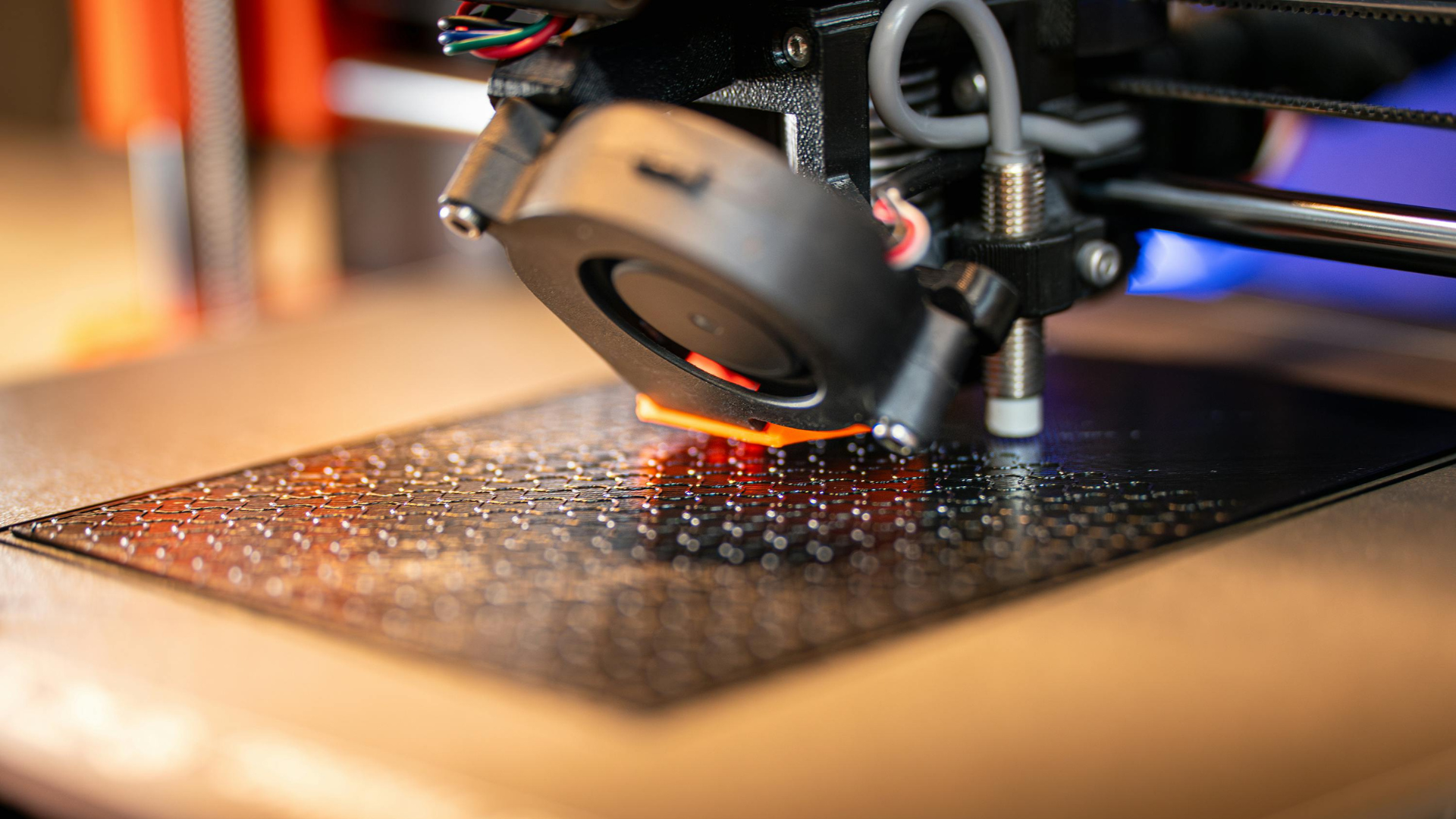
The ability to transition seamlessly from prototype to production, within the same facility, removes handoff risk and keeps quality consistent from first article to final shipment.
NJ-Specific Advantages
New Jersey’s manufacturing infrastructure is one of the most developed in the Northeast. Its dense industrial base, strategic location between New York and Philadelphia, and well-established logistics networks make it an ideal region for sourcing precision sheet metal fabrication.
For industrial buyers, working with a local NJ fabricator isn’t just a matter of convenience; it’s a competitive advantage.
Proximity alone changes the economics of a fabrication project. Shorter shipping distances mean lower freight costs, faster delivery, and the ability to visit the facility, review parts in person, and resolve issues without waiting on international shipping windows or time zone delays.
Local facility coverage across Union, Piscataway, Newark, Elizabeth, and Edison means most NJ-based manufacturers are within an hour of a qualified fabrication shop.
That proximity supports just-in-time delivery, reduces inventory carrying costs, and allows for faster design iterations when changes are needed mid-project.
Fast quoting is a measurable differentiator. Established NJ fabricators typically return quotes in under 4 hours for standard jobs.
Offshore suppliers often require 24 to 72 hours just for an initial response, before accounting for drawing clarifications, material substitutions, or revision cycles.
USA-made quality standards mean parts are produced under domestic regulatory and quality frameworks.
For industries like medical devices, defense, and electronics, domestic sourcing isn’t optional, it’s a compliance requirement. NJ fabricators understand those standards and build them into their processes by default.
Offshore comparison makes the case plainly. Overseas fabrication may appear cost-effective on a unit price basis, but the full picture includes longer lead times of 6 to 12 weeks, higher freight and import costs, limited recourse for quality failures, and communication barriers that slow down problem resolution. A local NJ shop closes that gap entirely.
Engineering support is another advantage that rarely gets priced into the comparison. Local fabricators can engage directly with your design team, reviewing DXF files, flagging manufacturability issues, and recommending process changes before a single part is cut. That collaboration prevents costly rework and keeps projects on schedule.
For procurement managers and engineers sourcing custom sheet metal parts, New Jersey’s fabrication ecosystem offers the full combination of speed, quality, proximity, and technical support that offshore and out-of-state suppliers consistently fail to match.
Industry Applications & Use Cases
Sheet metal fabrication in New Jersey serves a wide range of industries, from high-volume manufacturing to low-volume custom production.
The versatility of the process means the same facility that cuts automotive brackets in the morning can fabricate medical enclosures in the afternoon. What changes is the specification, tolerance, and finishing requirement, not the core capability.
Understanding where sheet metal fabrication fits within your industry helps procurement teams and engineers scope projects accurately, select the right processes, and set realistic timelines from the start.
Electronics & Electrical is one of the highest-demand verticals for NJ fabricators. Custom enclosures, control panels, chassis, and rackmount housings require tight tolerances, clean finishes, and reliable repeatability across production runs. In-house powder coating and silk screening allow finished, labeled enclosures to ship directly to the end customer.
Medical Devices demand the highest levels of precision and surface quality. Stainless steel housings, equipment frames, and device enclosures require TIG welding, tight dimensional control, and finishes that meet cleanroom and sterilization standards. Domestic sourcing is often a compliance requirement in this sector.
HVAC & Industrial Equipment relies heavily on sheet metal for ductwork, plenums, equipment housings, and structural frames.
These applications typically involve higher volumes, larger part sizes, and a need for durable protective coatings to withstand harsh operating environments.
Automotive & Transportation components including brackets, panels, and structural reinforcements require precise bending and forming with consistent tolerances across production batches. Local NJ fabricators support both prototype validation and production scaling for Tier 1 and Tier 2 suppliers.
Low-Volume & Custom Production is where NJ shops particularly excel. Small batch runs, one-off prototypes, and bridge production between design cycles are handled without the minimum order requirements that offshore suppliers typically impose.
Work With a Local NJ Sheet Metal Fabricator
New Jersey’s fabrication ecosystem covers every stage of the sheet metal process, from laser cutting and turret punching to welding, machining, and finishing.
Whether the requirement is a 7-day prototype or a full production run, local NJ shops deliver the speed, precision, and engineering support that out-of-state and offshore suppliers can’t consistently match.
For procurement managers and engineers, the decision to source locally comes down to three things: lead time, quality control, and accountability.
NJ fabricators deliver on all three, with fast quoting, in-house capabilities, and direct access to the teams building your parts.
If your operation requires custom sheet metal fabrication in New Jersey, now is the time to engage a local provider.
Request a quote, submit your DXF files, and get a response in under 4 hours. Precision parts, domestic quality, and reliable delivery are within reach.
Frequently Asked Questions
What is sheet metal fabrication?
Sheet metal fabrication is the process of cutting, bending, welding, and finishing metal sheets into precision components and assemblies. Common materials include steel, stainless steel, and aluminum. It serves industries ranging from electronics and medical devices to HVAC and automotive.
What services are included in sheet metal fabrication?
Core services include laser cutting, turret punching, press brake bending, MIG and TIG welding, CNC machining, powder coating, and electromechanical assembly. Full-service NJ fabricators handle all of these in-house without outsourcing to third parties.
How fast can a New Jersey fabricator turn around parts?
Laser-cut parts typically ship in 1 to 3 days. Bent and formed parts run 3 to 5 days. Welded assemblies take 5 to 7 days. Prototypes can be completed and shipped in as little as 7 days, and standard production runs typically deliver within 2 weeks.
What is the advantage of using a local NJ fabricator over offshore suppliers?
Local NJ fabricators offer faster quoting under 4 hours, shorter lead times, USA-made quality standards, lower freight costs, and direct engineering support. Offshore suppliers typically require 6 to 12 weeks lead time with limited recourse for quality issues.
Can NJ fabricators handle both prototypes and full production runs?
Yes. Most full-service NJ shops support the complete project lifecycle, from first-article prototypes through full production. The ability to transition within the same facility keeps quality consistent and eliminates handoff risk between vendors.
What industries does sheet metal fabrication serve in New Jersey?
Key industries include electronics and electrical, medical devices, HVAC and industrial equipment, automotive and transportation, and custom low-volume manufacturing. NJ fabricators are equipped to meet the tolerance and finish requirements of each sector.