


In sourcing metal components to make products such as HVAC enclosures, equipment housings, or industrial brackets, one of the decisions to make is whether a project will be on budget or will silently exceed it: whether to use sheet metal fabrication or metal stamping.
Both processes on the face of it form metal into working components. Practically, they are applied to very different production realities, particularly to manufacturers and OEMs based in New Jersey and New York City, where lead times, customization, and volume requirements are highly diverse.
Flexibility is normally linked to sheet metal fabrication. It is based on laser cutting, bending, welding and assembly processes to create custom parts in low to medium quantities.
Metal stamping, in contrast, employs special dies and high-speed presses to stamp large volumes of identical parts with a high level of consistency and at a very low unit cost once the tooling is installed.
The difficulty is in the fact that it is not always clear where the crossover point is and what approach is reasonable in a particular application.
This guide is a breakdown of the distinction between sheet metal fabrication and metal stamping in real world application.
We will contrast the working of each process, the costs that increase with the volume, the tolerances that are most important, and the industries where each method is most useful.
At the conclusion, you will have a clear guideline on the manufacturing method to use that will best suit your design needs, volume of production, and budget.
Manufacturers comparing processes often start by reviewing available sheet metal fabrication services in New Jersey, especially when flexibility, short lead times, or custom enclosures are required.
Core Process Definitions: Sheet Metal Fabrication vs. Metal Stamping
To comprehend the basic distinction between sheet metal fabrication and metal stamping, it is best to begin with the way each of the processes is carried out on the shop floor.
Although both processes convert flat metal into working parts, they are based on radically different equipment, processes, and assumptions of production. These variations have a direct impact on cost, lead time, flexibility and scalability.
A sheet metal fabrication is a multi-stage production process that is used to create custom or semi-custom metal products.
Industry guidance on tooling ROI thresholds shows that stamping becomes cost-effective only after sufficient volume is reached to amortize die costs.
It is usually a combination of multiple processes, cutting, forming, joining, and finishing, to produce parts that might be geometrically, or even in thickness or material, different between jobs.
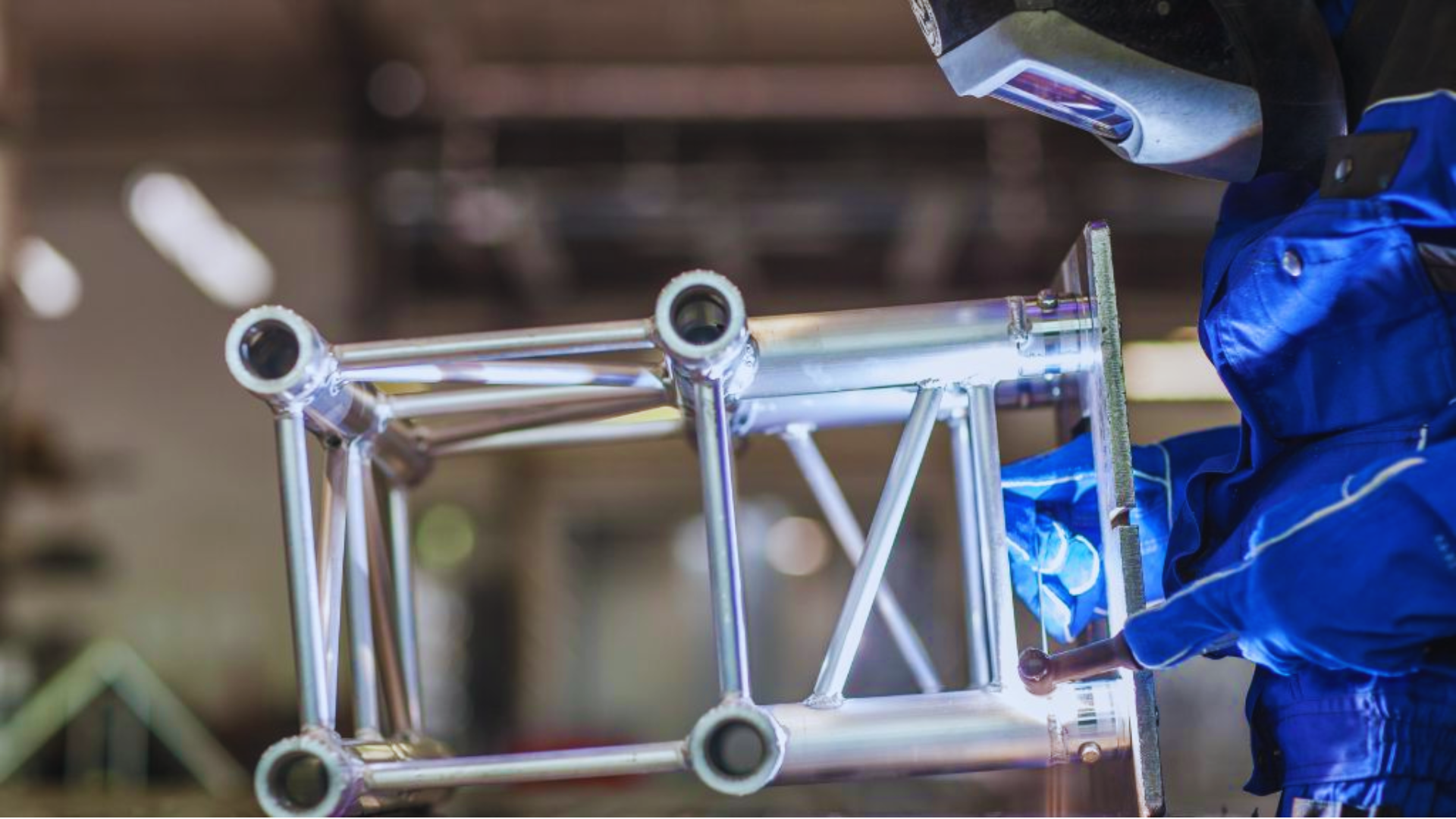
The popular fabrication processes are laser cutting or shearing to form flat patterns, press brake forming to form bends and angles, welding or assembly, and secondary finishing like powder coating.
Since the majority of fabrication work is CNC based and is not dependent on permanent tooling, design changes can be easily implemented with little additional cost.
This versatility has made sheet metal fabrication highly appropriate in prototypes, small-scale production, and projects that are likely to require engineering changes.
It is also widely applied in custom enclosures, brackets, frames, and ductwork in manufacturing and HVAC applications, especially where quick turnaround and design flexibility are important.
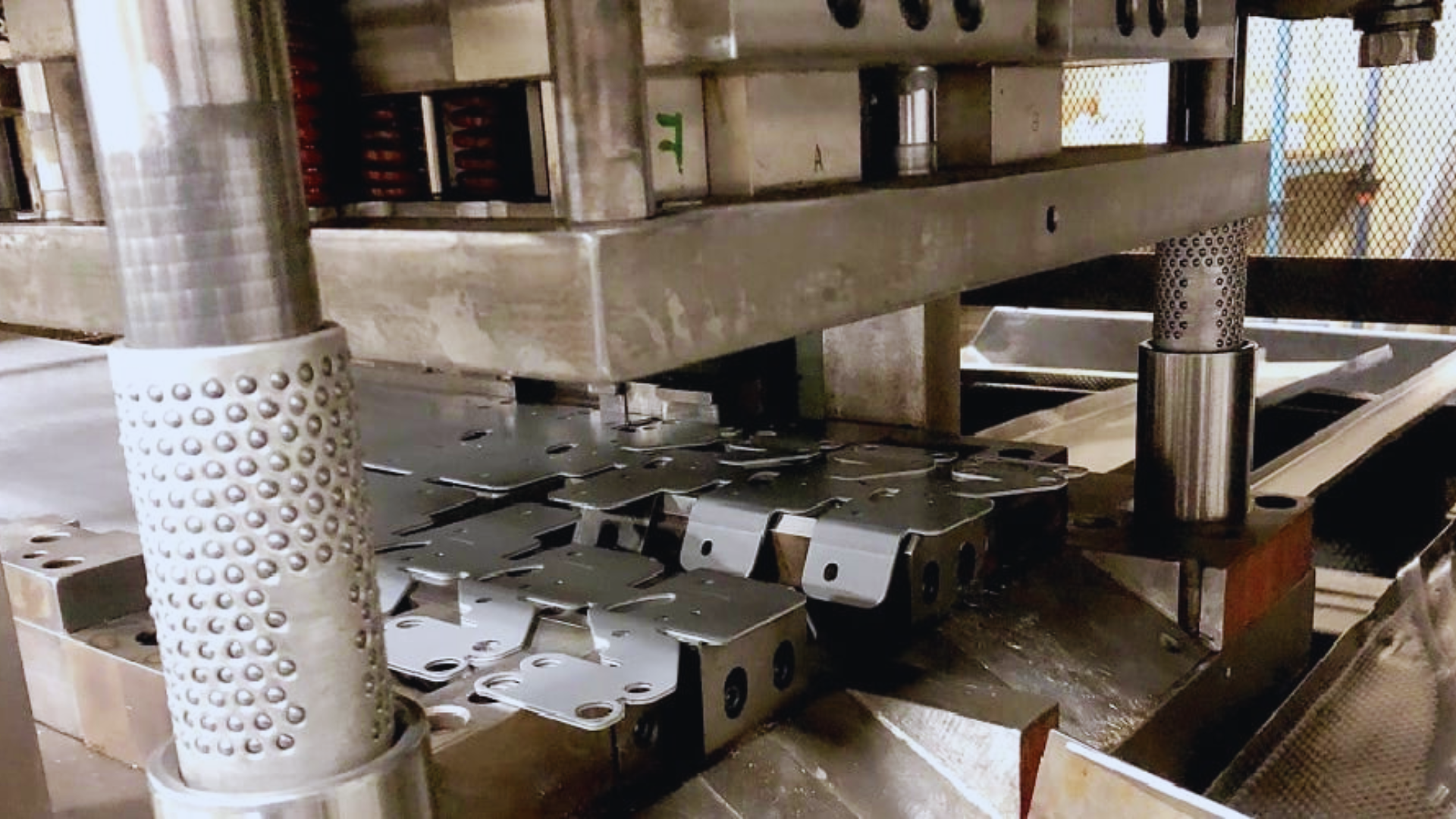
In comparison, metal stamping is a press-based forming technique, intended to be fast, repeatable and high volume.
It involves hardened steel dies (usually progressive dies) attached to mechanical or hydraulic presses to punch, form, coin or draw sheet metal into a finished or near-finished form.
After constructing the tooling, stamping can be done to create thousands of the same parts in an hour with very high levels of consistency.
The coil stock is usually used to feed the material and this minimizes the wastage of the material and enhances efficiency.
The tradeoff is less flexibility. The design changes typically involve changing or altering tooling, which introduces cost as well as lead time.
This approach is especially common for custom HVAC enclosures, brackets, and control housings where dimensions or layouts vary between installations.
This is why metal stamping is most appropriate in case of long production runs when the geometry of the parts is constant and the demand is worth the initial investment in the tools.
Typical uses are automotive parts, appliance parts, electrical brackets and other high volume industrial products.
At-a-Glance Process Comparison
| Aspect | Sheet Metal Fabrication | Metal Stamping |
| Primary Methods | Laser cutting, bending, welding, assembly | Die pressing, punching, forming |
| Equipment | CNC lasers, press brakes, weld cells | Mechanical or hydraulic presses with dies |
| Tooling | Minimal or reusable | Custom hard tooling required |
| Output | Custom or semi-custom parts | Identical, repeatable parts |
| Ideal Volume | Low to medium | High volume |
Key Differences Comparison: Sheet Metal Fabrication vs. Metal Stamping
While sheet metal fabrication and metal stamping both shape flat metal into finished components, they differ significantly in how they handle volume, cost, lead time, and design flexibility.
These differences become especially important once a project moves beyond the prototype stage and into steady production. The comparison below breaks down where each process performs best and why.
| Category | Sheet Metal Fabrication | Metal Stamping | Best Fit |
| Production Volume | Low to medium volumes, typically one-off parts up to a few thousand units | High-volume production, often 10,000+ identical parts | Stamping for scale |
| Upfront Costs | Minimal tooling costs; CNC programming only | High tooling investment for dies and fixtures | Fabrication for early-stage projects |
| Per-Unit Cost | Higher per part due to labor and machine time | Very low per-unit cost once tooling is amortized | Stamping at high volumes |
| Lead Time | Short lead times; design changes can be implemented quickly | Longer upfront lead times for tooling; fast once in production | Fabrication for urgent timelines |
| Design Flexibility | High flexibility; easy to revise or customize | Low flexibility; tooling locks in design | Fabrication for evolving designs |
| Precision & Tolerances | Good tolerances suitable for most enclosures and assemblies | Excellent repeatability and tight tolerances | Stamping for consistency |
| Material Waste | Moderate; parts are cut from sheets | Minimal; coil-fed efficiency | Stamping for material efficiency |
| Part Complexity | Handles complex geometries and assemblies well | Best for simpler, repeatable shapes | Depends on design |
Practically, sheet metal fabrication is usually the choice of the early stages of a product lifecycle.
It enables engineers to experiment with designs, revise and manage costs without investing in costly tooling.
To most manufacturers, particularly those that manufacture HVAC components, control panels or even custom enclosures, fabrication offers the flexibility required to meet the changing specifications or customer requirements.
Metal stamping is beneficial when the volumes are high and the design is stable. The cost of tooling may be several thousand to tens of thousands of dollars but the cost is recovered in a short period when production is at the appropriate level.
For programs that exceed these volume thresholds, reviewing available metal stamping capabilities can help determine whether tooling investment makes long-term financial sense.
At that stage stamping provides shorter cycle times, reduced labor expenses and extremely repeatable parts that cannot be produced with fabrication alone.
In the actual manufacturing world, the choice is hardly ever technical. Budget, confidence of the forecast, storage and delivery schedule are some of the factors that determine which one is more sensible: fabrication or stamping.
In high-volume production, stamping is often selected to meet tighter repeatability requirements aligned with ASME dimensional tolerances for formed metal components.
Fabrication is often used by many companies and is followed by stamping when the demand warrants the investment, which is a flexible approach at the start and efficient at scale.
Applications & Industry Examples
The real distinction between sheet metal fabrication and metal stamping can be seen most clearly when you consider the application of each process in a real production setting.
Although the two approaches are necessary in contemporary manufacturing, they are inclined to favor extremely different products, schedules, and business models.
Where customization, variability or reduced volumes are needed, sheet metal fabrication is often employed. This may involve custom enclosures, ductwork, mounting brackets, equipment frames, and control panels in HVAC and general manufacturing.
These components might have to be modified to suit the site conditions or modified to suit new components or made in small quantities to suit individual customers.
Since fabrication is not dependent on dedicated tooling, it enables the manufacturers to react fast to engineering modifications without initiating the production cycle.
During prototype and pilot-production phases of a product, fabrication is also common. Engineers are able to check fit, functionality and assembly prior to committing to a larger volume production.
This strategy is particularly typical of manufacturers with regional markets such as New Jersey and New York City where fast turnaround and smaller batch sizes are frequently more important than maximum throughput.
Metal stamping on the other hand is most appropriate when the components are high volume, repeatable and the design of the component does not change with time.
Appliance panels, automotive brackets, electrical parts, clips, and reinforcement parts are common examples that are manufactured in tens or hundreds of thousands.
Stamping is the most consistent and efficient tooling method when there is a long production cycle and predictable demand of the product.
Manufacturers providing national or international markets often use stamping, where the unit cost and repeatability of dimensions are important.
The initial investment in the tooling is paid off in these instances through long term savings, shorter cycle time and less labor per part.
Stamping can be more efficient than fabrication in simple geometries, and in thin-gauge materials, at scale.
Fabrication and stamping do not necessarily go hand in hand in most operations. A hybrid strategy is often observed in which some parts are stamped to be efficient and others are made to be flexible and then joined together to create a complete product.
This mix enables manufacturers to manage the costs without compromising on the flexibility, particularly as the products go through the phases of early-stage production to mature and high-volume programs.
Cost & Decision Factors
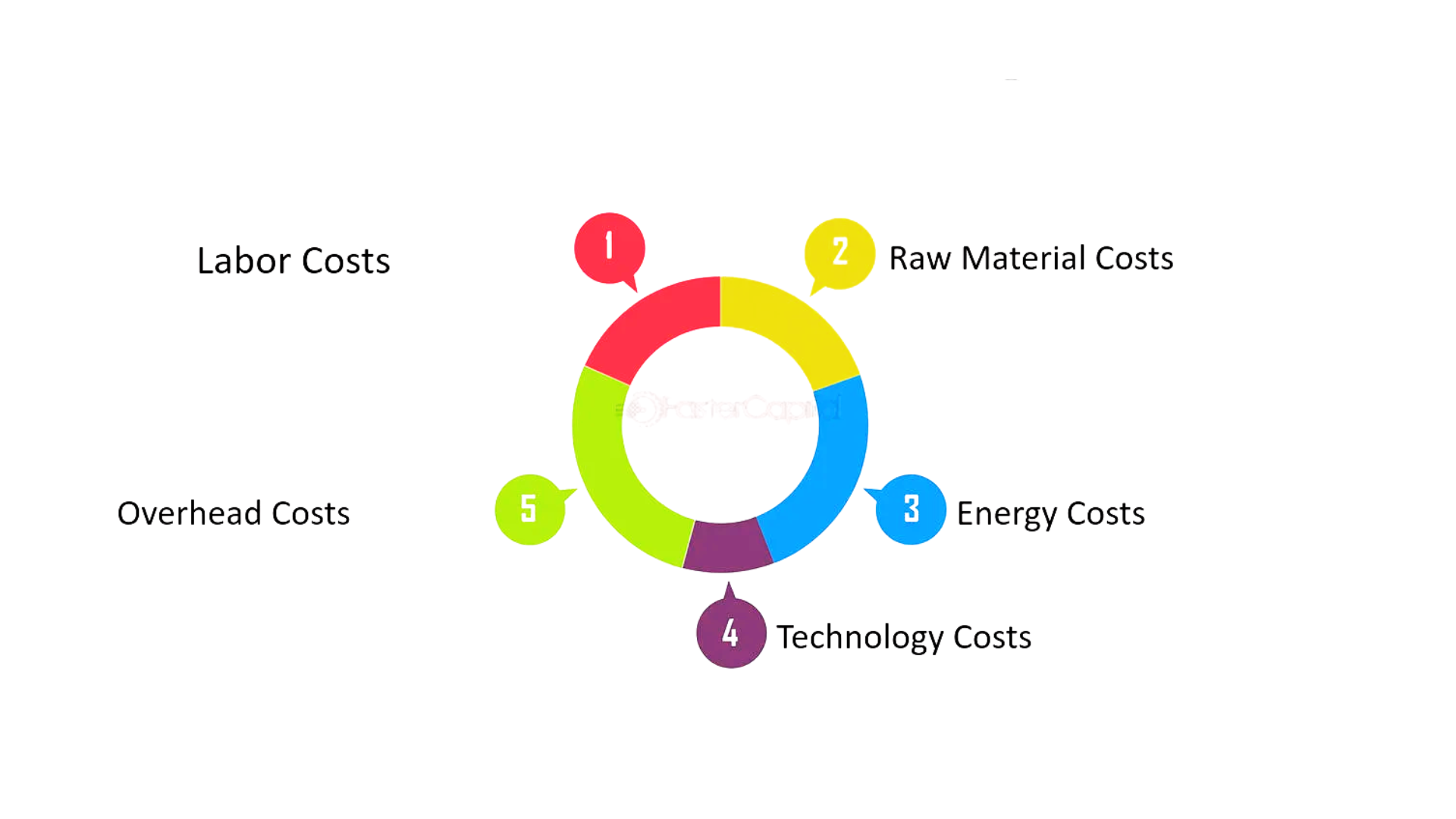
Cost is often the deciding factor when choosing between sheet metal fabrication and metal stamping, but it’s rarely as simple as comparing a per-part price.
The real comparison comes from understanding how tooling, labor, materials, and volume interact over the life of a project.
Looking at total cost instead of unit cost helps avoid decisions that seem economical upfront but become expensive as production scales.
A useful way to evaluate both methods is to think in terms of total production cost:
Total Cost = Tooling + Materials + Labor
With sheet metal fabrication, tooling costs are typically low or nonexistent. Parts are programmed and produced using CNC equipment, so the main drivers are material usage and machine time.
Labor and processing time tend to be higher per part, but the absence of dedicated tooling makes fabrication cost-effective for low-volume runs, prototypes, and projects where designs may change.
If revisions are needed, updates can usually be made without restarting the cost structure from scratch.
Metal stamping reverses that equation. Tooling costs are significantly higher because custom dies must be designed and built before production begins.
Depending on part size and complexity, tooling can range from a few thousand dollars to well over $50,000. Once tooling is in place, however, labor costs drop dramatically, and per-unit pricing falls quickly.
At higher volumes, stamping often becomes the most economical option by a wide margin.
Volume is the primary tipping point between the two methods. Fabrication typically makes sense for production runs in the hundreds or low thousands.
Stamping becomes cost-effective once volume is high enough to amortize tooling costs, often around 5,000 to 10,000 parts, depending on part complexity and material.
Beyond that threshold, the savings per unit usually outweigh the initial tooling investment.
Tolerances and material selection also play a role. Stamping excels at producing thin-gauge parts with tight, repeatable tolerances, making it ideal for components that must assemble consistently at scale.
Fabrication can achieve excellent accuracy as well, but complex bends, weldments, or mixed materials may increase labor time and cost.
For thicker materials or assemblies requiring multiple operations, fabrication often remains the more practical choice.
Finally, timeline and risk should be considered alongside cost. Fabrication offers faster startup and lower commitment, which reduces risk when demand forecasts are uncertain. Stamping requires confidence in volume and design stability.
For many manufacturers, the most efficient path is to start with fabrication, validate demand, and transition to stamping once production levels justify the investment.
Frequently Asked Questions
What’s cheaper for producing 500 parts: fabrication or stamping?
For a run of 500 parts, sheet metal fabrication is almost always the more cost-effective option. Fabrication avoids the high upfront tooling costs required for stamping and allows parts to be produced using CNC programming and standard equipment. At this volume level, the per-unit savings from stamping typically do not offset the cost of building dedicated dies.
At what volume does metal stamping usually become more economical?
Metal stamping generally becomes cost-effective once production reaches several thousand units, often in the range of 5,000 to 10,000 parts or more. The exact break-even point depends on tooling cost, part complexity, material type, and tolerance requirements. Higher volumes allow tooling costs to be amortized quickly, driving down the per-unit price.
Can metal stamping be used for thick materials?
Metal stamping is most effective with thin-gauge materials. While thicker metals can be stamped, practical limits are usually around 0.25 inches, depending on the material and press capacity. For thicker sections or structural components, sheet metal fabrication or machining is often the better choice.
Is sheet metal fabrication accurate enough for precision parts?
Yes. Modern CNC fabrication equipment can achieve tight tolerances suitable for many industrial applications. However, stamping offers superior repeatability for high-volume production, especially when thousands of identical parts must assemble consistently without variation.
Are design changes easier with fabrication or stamping?
Design changes are much easier and less expensive with sheet metal fabrication. Modifying a fabricated part typically involves updating a CNC program. In stamping, even small design changes may require modifying or rebuilding tooling, which adds time and cost.
Can fabrication and stamping be used together in the same project?
Yes, and this is common in practice. Many manufacturers use a hybrid approach, fabricating complex or low-volume components while stamping high-volume parts. These components are then assembled into a finished product, balancing flexibility with efficiency.
Is stamping always faster than fabrication?
Once tooling is complete, stamping is significantly faster per part. However, fabrication usually has a much shorter startup time. If speed to market is critical and volumes are low, fabrication can deliver finished parts sooner overall.
Conclusion
The decision of whether to use sheet metal fabrication or metal stamping is not about which one is the best but which one is the most appropriate to the realities of your project.
The volume of production, design stability, tolerances and budget are all contributory factors in the selection of the most viable manufacturing strategy. The knowledge of these factors at an early stage will save unnecessary expenditure at a later stage in the production cycle.
Sheet metal fabrication is flexible and fast and is therefore suitable in prototypes, short runs and projects where the design can change.
It enables manufacturers to be fast, flexible, and contain the initial expenses. Metal stamping, conversely, is designed to be efficient at scale.
Stamping offers low per-unit costs, high repeatability, and reduced cycle time when demand is steady and volumes are large and tooling has been installed.
To most manufacturers, the best approach is not to select one approach and stick to it but to strategize towards development.
Beginning with fabrication will enable designs to be perfected and the demand to be confirmed. When production is high and designs are stabilized, switching to stamping can open up a lot of cost-saving and efficiency in operation.
In other instances, a combination of the two processes in the same program offers the most optimal level of flexibility and scalability.
When you are considering a new component or reconsidering an old one, the correct course of action begins with a clear picture of volume needs, tolerances, materials and long-term production objectives.
It is possible to talk to a manufacturing partner at the initial stages of the process to determine the most cost-effective way to go.
The most accurate way to evaluate cost and feasibility is to request a fabrication or stamping quote based on your actual part geometry, material, and projected volume.